



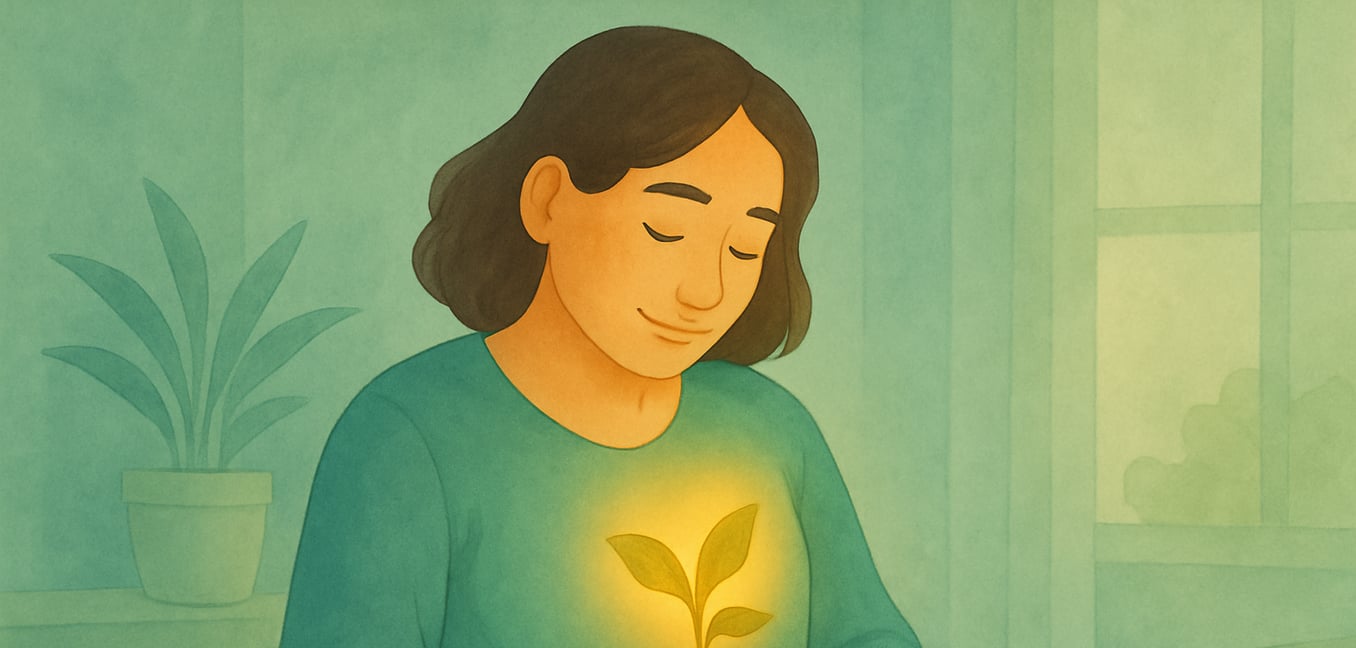





Living with a rare or chronic illness brings unique challenges. Beyond the physical symptoms, there’s often a quiet struggle with emotional well-being. Many in our community experience what’s called a “diagnostic odyssey,” a long period of uncertainty before finding answers. This path, along with managing daily symptoms, can truly test one’s emotional strength. We know this journey can feel isolating, and we want you to know: you are not alone.
Today, we're talking about the significant connection between our physical and mental health, especially when living with a rare or chronic condition.
What are the invisible burdens of rare and chronic diseases?
When you're living with a chronic illness, it becomes something you have to think about every single day, and it touches every part of your life; how you feel physically, emotionally, and even how you connect with others. If you have a rare disease, things get even more complicated. You might spend years going from doctor to doctor trying to get answers, searching for information that barely exists.
What makes this especially tough is that so much of the struggle doesn't show. You might look fine on the outside while dealing with pain, fatigue, or worry that no one else can see. And here's something important: when your body is fighting an ongoing illness, your mental health often takes a hit too.
Why are depression and anxiety so common with chronic illness?
Living with a chronic illness can leave people feeling sad, helpless, and like they've lost control over their lives, which often leads to depression and anxiety. When symptoms are unpredictable, when you're worried about what might happen next, and when medical bills keep piling up, the stress never really goes away. People with chronic conditions are actually 2 to 3 times more likely to become depressed than others.
This can create a challenging cycle: physical symptoms may affect mental well-being, which can impact self-care and treatment follow-through. However, integrated mental health support alongside medical care can help break this pattern and improve overall outcomes.
For parents and caregivers, the path to diagnosis brings confusion, despair, and uncertainty. Diagnosis moments are intense, with anger, shock, and a realization that "life will never be the same". Poor diagnostic delivery, lacking empathy or information, can lead to mental health decline and trauma. Many report diagnoses by phone without psychological support. The ongoing medical journey can feel like chronic, internal trauma, where the body itself seems dangerous, leading to PTSD-like symptoms. Healthcare providers must recognize this "medical trauma" and offer trauma-informed care.
What It's Like to Grieve a Life You're Still Living
Grief in chronic illness extends beyond death. It involves mourning the life before illness, coping with present realities, and managing ongoing losses. This dynamic grief reactivates with new losses or shifts in expectations. Anticipatory grief, sadness about expected future losses, is also relevant.
A critical aspect is disenfranchised grief, where losses are not widely recognized or validated by society. This includes lost dreams, careers, or one's former self. This lack of validation intensifies sadness, frustration, and anxiety, leading to feelings of being unheard. This societal invalidation compounds emotional burden, hindering healing and identity integration, causing isolation.
Chronic illness profoundly impacts self-identity and future plans. Individuals mourn their lost healthy self and planned life, leading to a deep sense of identity loss. This grieving covers physical changes and mourning a future out of reach. It disrupts self-identity and self-esteem, requiring adjustments to aspirations and roles. Living with chronic illness requires identity reconstruction, an effort to build a new, integrated sense of self that includes the illness. Effective support must address this identity work.
How toxic positivity harms your mental health
"Toxic positivity" means excessively overgeneralizing happiness in all situations, even when inappropriate. While well-intended, it minimizes authentic emotions, leaving recipients feeling unheard or ashamed. It tries to silence pain and invalidate lived experience. This emotional invalidation fosters shame, forcing emotional suppression, which increases physiological stress and isolation. Toxic positivity places the burden on the ill individual to manage others' discomfort, undermining mental health.
Experiencing pain and suffering is uncomfortable, but expressing these experiences is vital for mental and physical health. Feeling a full range of emotions is human. Emotional suppression breeds guilt, shame, and anxiety, and can paradoxically magnify suppressed feelings. Studies show individuals experience fewer physiological stress signs when emotions are openly expressed.
Acknowledging and validating emotional experiences is profoundly helpful. Supportive responses include: "I'm sorry you're going through this," "Describe what you're feeling, I'm listening," and "I'm here for you, no matter what". Such responses encourage vulnerability. Strong, authentic relationships rest on vulnerability, trust, and authenticity.
Why does chronic illness often lead to social isolation?
Individuals with chronic conditions often reduce social activities due to pain or fatigue, leading to loneliness. They may withdraw from social circles. This is not solely the patient's choice; friends and family may struggle to adapt, leading to "compassion fatigue" or misunderstanding. Changes to identity can also cause avoidance of contact due to fear of rejection. This cycle fosters resentment and grief.
Social isolation is a complex, reciprocal dynamic, stemming from both the patient's internal struggles and the external social environment's lack of understanding or discomfort. This highlights a systemic issue where society is often ill-equipped to provide sustained support. Effective strategies must address both individual coping and social network education.
The "fear of being a burden" is common, linked to "treatment burden" and "psychological impact on caregivers". The continuous demands of chronic illness treatment can feel overwhelming, leading to feelings of being a burden on loved ones. The emotional and physical demands on caregivers can cause burnout. Sharing feelings openly can help "lift the burden" of these anxieties. This fear extends to family dynamics, including children. Family-centered interventions are crucial.
What does it mean to find joy in chronic illness?
Finding joy amidst chronic illness does not mean ignoring pain. It means consciously shifting focus: discovering joy in what is still possible, redefining success, and focusing on achievable aspects. Practicing gratitude, perhaps through a journal, helps redirect focus to positive experiences. Cultivating self-compassion is vital, breaking cycles of negative self-regard and self-blame.
Self-compassion involves treating oneself with kindness, acknowledging limitations, allowing breaks without guilt, and accepting difficult moments. Research shows self-compassion leads to lower stress, improved emotional regulation, and better health practices. It promotes happiness and optimism, while decreasing depression and rumination. It is an antidote to shame and guilt from not meeting pre-illness expectations, helping individuals shift from a "doing" to a "being" mindset.
Cultivating joy through routines, creativity, and nature:
-
Joyful Daily Routine: A flexible, consistent daily schedule provides stability and manages fatigue, creating space for joy. Plan low-energy activities and prioritize self-care. Set realistic goals.
-
Creativity: Creative expression (art, writing, music) offers joy and purpose. Journaling helps process emotions.
-
Nature: Spending time in nature improves mood and reduces stress. Even with limited energy, small moments are beneficial.
-
Purpose Beyond Illness: Illness does not define identity or worth. Seeking purpose outside illness brings meaning, through volunteering, sharing experiences, or adapting hobbies. Setting personal goals creates renewed purpose.
Is resilience a skill you can learn?
Resilience is the ability to bounce back from challenges and stress in ways that help you grow stronger. For people living with chronic conditions, building resilience becomes part of everyday life. Taking care of yourself means looking at the whole picture, your physical health, mental well-being, and social connections.
The good news is that resilience isn't something you either have or don't have. It's made up of skills you can learn and get better at over time. This means you have the power to strengthen your ability to handle whatever comes your way.
A "toolbox" of resilience skills involves:
-
Mindset Changes: Cultivate a supportive inner voice. Maintain perspective, avoid imagining worst-case scenarios. Challenge negative thoughts. Practice radical acceptance. Focus on strengths.
-
Actions & Coping: Proactively cope by seeking information and taking charge of health. Identify areas to gain control.
-
Flow States: Engage in activities demanding full attention (hobbies, creative activities) to quiet thoughts. Mindfulness meditation helps stay present.
-
Basic Needs & Self-Care: Prioritize sleep, balanced meals, and enjoyable physical activity. Assess substance use. Let go of perfectionism.
-
Avoid Triggers: Consciously avoid activities that cause negative thinking.
-
Distraction: For immediate relief, use short-term distractions.
-
Journaling: Maintain a feelings journal to process emotions.
How has the understanding of mind-body connection evolved through time?
For most of human history, mental health has been deeply misunderstood and heavily stigmatized. Early societies often blamed mental illness on supernatural forces or spiritual punishment. It wasn't until ancient Greece that people began looking for more scientific explanations. Interestingly, Traditional Chinese Medicine has recognized the connection between mind and body for thousands of years, long before Western medicine caught up to this understanding.
The Renaissance brought more compassionate ways of thinking about mental health. The 19th century gave us Sigmund Freud's psychoanalysis, and by the 1930s, doctors were starting to explore psychosomatic medicine, looking at how our minds actually affect our physical health.
George Engel later popularized the biopsychosocial model, which became a foundation of modern healthcare. Even though this makes intuitive sense and science backs it up, the traditional medical model still tends to focus mainly on physical symptoms, often overlooking the psychological and social aspects of health.
This long, winding journey shows just how hard it's been to get mind and body working together in healthcare. It helps explain why people with chronic illnesses today still have to fight so hard to get the comprehensive care they need.
Historical accounts of psychological symptoms following military trauma date back to ancient times ("nostalgia," "Soldier's heart," "railway spine," "shell shock," "war neuroses," "battle fatigue"). The formal diagnosis of Post-Traumatic Stress Disorder (PTSD) recognized traumatic events as the cause. This historical pattern shows a tendency to seek purely physical explanations for profound psychological responses. The body's response to extreme stress or ongoing illness can be inherently traumatic, a slow concept for medicine to fully embrace. This reinforces the need for vigilance and education to recognize the psychological dimensions of physical illness.
What are the best support options for you?
Psychotherapy, or "talk therapy," is an effective treatment for PTSD and helps manage mental health symptoms. It equips individuals with skills to manage symptoms and teaches adaptive coping. Cognitive Behavioral Therapy (CBT) is evidence-based for chronic illness mental health challenges. Other approaches include Dialectical Behavior Therapy (DBT) and Acceptance and Commitment Therapy (ACT). For PTSD, Exposure Therapy helps safely confront frightening situations. General counseling provides a safe space to process difficult emotions and develop practical coping strategies.
Support groups are invaluable for reducing isolation, building belonging, and providing coping strategies. They offer a unique space to share experiences and connect with others who "get it". Organizations like the National Alliance on Mental Illness (NAMI) offer peer-led groups (NAMI Connection) and family support groups (NAMI Family Support Groups), many available virtually. The Center for Chronic Illness provides free, virtual, professionally-facilitated support groups for anyone impacted by chronic illness and rare disease.
To truly care for someone's health, we need to treat the mind and body as one. This means doctors, therapists, and other healthcare professionals must work together, combining physical treatments with mental health support. It's also crucial that you, the patient, feel empowered to be an active part of your own care team.
While we know this coordinated, holistic approach is best, the reality is that healthcare systems often falls short. There's a major disconnect between what science tells us about the importance of mental health and the support that's actually available, leaving many without the complete care they need.
Embracing your journey with strength and hope
Living with a rare or chronic illness is a journey filled with unseen battles. It's okay to feel sad, angry, or frustrated; these feelings are a natural part of your experience. Don't let anyone minimize your reality with easy platitudes.
While the challenges are real, so is your capacity for resilience and joy. You can find strength by shifting your focus to what's possible, treating yourself with kindness, and connecting with others who understand. Remember to make space for creativity, nature, and things that give you a sense of purpose beyond your illness.
Help is available. Therapy, counseling, and support groups can provide a safe space to process your emotions and build coping skills. Though the healthcare system can be difficult to navigate, you have the power to advocate for your needs.
Your journey, while altered, can still be rich with meaning and connection.
For a brief look at this topic, be sure to listen to our short podcast episode.
Sources
-
Scleroderma Victoria. (n.d.). Building Resilience: An Easy Guide to Managing Life with Chronic Health Conditions. Scleroderma Victoria. Retrieved from https://www.sclerodermavictoria.com.au/building-resilience-an-easy-guide-to-managing-life-with-chronic-health-conditions/
-
[Zhang, Z. (2023). Diagnosing rare diseases and mental well-being: a family's story. Orphanet journal of rare diseases, 18(1), 45. https://www.ncbi.nlm.nih.gov/pmc/articles/PMC9990187/
-
Jackson, K. (2014). Grieving Chronic Illness and Injury — Infinite Losses. Social Work Today, 14(4), 18. https://www.socialworktoday.com/archive/070114p18.shtml
-
Minnesota Clinic for Health & Wellness. (n.d.). Understanding the Mind-Body Connection: A Comprehensive Guide. Retrieved from https://www.mnclinicforhealth.com/blog/understanding-the-mind-body-connection-a-comprehensive-guide
-
The Thriving Spoonie. (2024, July 23). The Dark Side of Toxic Positivity in Chronic Illness Communities. https://www.thethrivingspoonie.com/the-dark-side-of-toxic-positivity-in-chronic-illness-communities/
-
NAMI. (2020, April 27). How I Use ACT and CBT to Help People Cope with Health Conditions. https://www.nami.org/Blogs/NAMI-Blog/April-2020/How-I-Use-ACT-and-CBT-to-Help-People-Cope-with-Health-Conditions
-
NAMI. (n.d.). Support Groups. Retrieved from https://www.nami.org/Support-Education/Support-Groups